
KwickAcademy Computer Science · 7 min · free
Technology and Society: Health, Gender and Disability Issues
Screens cause eye strain, poor posture and addiction. Computing also has a gender gap, accessibility needs and a digital divide.
Follows the syllabus of: CBSE Class 10 Computer Applications (165), CBSE Class 11 Computer Science (083), CBSE Class 11 Computer Science Essentials (083), CBSE Class 12 Informatics Practices (065)
On screen in this lesson
Eye strain
| Long screen time dries and tires the eyes |
| Symptoms: burning, blurred vision, headache |
| Follow the 20-20-20 rule |
| Keep the screen at arm's length, slightly below eye level |
Posture and body pain
| Text neck: bending the head over a phone |
| Back pain from slouching in a chair |
| Wrist pain from repeated typing: RSI |
| Sit straight, feet flat, take breaks |
Technology addiction
| Cannot stop using games or social media |
| Sleep loss, poor marks, less outdoor play |
| WHO lists gaming disorder as a condition |
| Set limits; no screens an hour before bed |
Health problems and fixes
| Problem | Cause | Fix |
|---|---|---|
| Eye strain | staring at screens | 20-20-20 rule |
| Text neck | looking down | raise the screen |
| RSI | repeated typing | breaks, stretches |
| Poor sleep | late screen use | screens off early |
Gender issues in computing
| Fewer women study and work in computing |
| Stereotype: coding is a boys' subject |
| Girls often get less device access at home |
| Online harassment targets women more |
Why it matters
| Teams with diverse people build better products |
| Apps may ignore women's needs |
| Talent is lost when half the people are left out |
| Women pioneers: Ada Lovelace, Grace Hopper |
Quick answers
What is the 20-20-20 rule?
Every 20 minutes, look 20 feet away for 20 seconds.
Name one assistive technology for blindness.
A screen reader or a braille display.
KwickClips from this lesson
Short clips, one idea each. Good for revision the night before.
 What is the 20-20-20 rule?39 sec
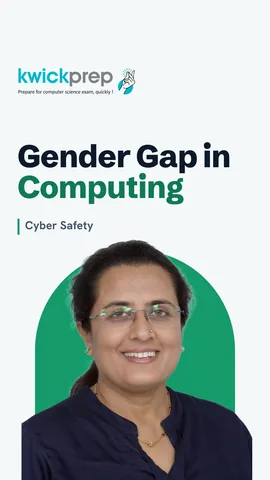 Who wrote an early computer program?40 sec
 What does a screen reader do?40 sec
 What is the digital divide?41 sec
The full lesson, in text
Hello students, welcome to Kwickprep. Technology makes life easier, but does it help everyone equally, and does it ever hurt us? Today we will learn about health effects of technology, gender issues in computing, assistive technology for people with disabilities, and the digital divide.
Let us begin with health, and first with our eyes. When we stare at a screen for long, we blink less, so the eyes become dry and tired. This causes burning, blurred vision and headaches, often called digital eye strain. Follow the twenty twenty twenty rule: every twenty minutes, look at something twenty feet away for twenty seconds. Also keep the screen about an arm's length away, and slightly below eye level.
Next, our posture, which means the way we hold our body. Bending the head down over a phone for hours strains the neck, a problem called text neck. Slouching in a chair for long periods causes back pain. Typing or scrolling for hours can cause pain in the wrist and fingers, called repetitive strain injury, or RSI. To prevent this, sit straight with feet flat on the floor, and stand up and stretch every half hour.
Technology can also become an addiction. Addiction means a person cannot stop, even when the habit is clearly harming them. It shows up as sleep loss, falling marks, and less time with family or outdoor play. The World Health Organization lists gaming disorder as a real health condition. Use screen time limits on your phone, and keep screens away for an hour before bed.
Here is a summary table you can use in exams. Eye strain comes from staring at screens, and the fix is the twenty twenty twenty rule. Text neck comes from looking down at a phone, so raise the screen to eye level. Repetitive strain injury comes from repeated typing, so take breaks and stretch. Poor sleep comes from late night screen use, so switch screens off early.
Now let us look at gender issues. Around the world, fewer women than men study computer science or work in technology jobs. One reason is a stereotype, a fixed but wrong belief, that coding is a boys' subject. In many homes, a boy gets the phone or laptop first, so girls get less practice. Women also face more online harassment, which can push them away from online spaces.
Why does this matter to everyone? Teams with different kinds of people notice more problems and build better products. When women are missing, apps and devices can ignore women's needs, like health apps that once did not track periods. A country loses talent when half its people are left out. And women were computing pioneers. Ada Lovelace wrote an early computer program, and Grace Hopper helped build early programming languages.
Here is how schools and families can close the gap. Give girls and boys equal time on devices and in the computer lab. Encourage girls to join coding clubs, and share stories of women role models, including women scientists at ISRO. Call out stereotypes when you hear them in class. And build safe online spaces, where harassment is reported and acted on quickly.
Now, disability and technology. A disability is a physical or mental condition that makes some activities harder. Examples are low vision or blindness, hearing loss, and limited movement of the hands. Assistive technology means any device or software that helps a person with a disability do a task. In India, the Rights of Persons with Disabilities Act, two thousand sixteen, says public services, including websites, must be accessible.
Here are common examples of assistive technology. A screen reader, like NVDA on computers or TalkBack on Android, reads screen text aloud for a blind user. A screen magnifier enlarges text for a person with low vision. A braille display shows text as raised dots that a blind user reads by touch. Live captions turn speech into text for people with hearing loss. Voice control lets a person with limited hand movement operate a device by speaking.
Accessibility also depends on how we design apps and websites. Add alt text, a short written description, to every image, so a screen reader can describe it. Use strong colour contrast and readable font sizes. Add captions to every video. And make sure every button can be used with a keyboard alone, without a mouse. Pause and predict: a website shows its menu only as pictures with no alt text, what will a screen reader say? Almost nothing useful, so the blind user is locked out.
Finally, the digital divide. The digital divide is the gap between people who have access to digital technology and skills, and people who do not. In India, villages often have weaker internet than cities. Many families cannot afford a smartphone, a laptop or enough mobile data. Skills and language matter too, since much online content is in English, and older people may not know how to use apps.
India runs several programmes to bridge this gap. BharatNet aims to bring broadband internet to village panchayats. PMGDISHA trains rural citizens in digital literacy, such as using a phone to make payments. DIKSHA offers free learning content in many Indian languages. And you can help too, by teaching a grandparent or neighbour to use a digital service safely.
Let us revise what we learned today. Too much screen use can cause eye strain, poor posture and addiction. The fixes are the twenty twenty twenty rule, good posture, regular breaks and screen limits. Fewer women work in computing, so we must fight stereotypes and give equal access. Assistive technology like screen readers, captions and voice control helps people with disabilities. The digital divide is unequal access to technology, and schemes and shared skills help bridge it.
Courses that teach this
| Course | Unit |
|---|---|
| CBSE Class 10 Computer Applications (165) | Cyber ethics |
| CBSE Class 11 Computer Science (083) | Society, Law and Ethics |
| CBSE Class 11 Computer Science Essentials (083) | Society, Law and Ethics |
| CBSE Class 12 Informatics Practices (065) | Societal Impacts |
| Edexcel GCSE GCSE Computer Science (1CP2) | Topic 5: Issues and impact |
Free to watch, no sign-up. The live classes are the paid course; these lessons stay free either way.
Disclaimer. KwickAcademy is free study material for general learning and revision. Parts of it, including the voice-over, are produced with the help of AI tools and may contain errors; if you spot one, please tell us and we will correct it. Syllabus, marks and exam details follow the latest official board publications available to us, and boards can change them at any time, so always confirm against your board's official website and your school. Using this material does not guarantee any marks or result. Board names and trademarks belong to their owners; Kwickprep is not affiliated with or endorsed by any examination board. We never ask for passwords, OTPs or ID numbers. Your progress is saved only in this browser. Full disclaimer · Privacy