

Python Classes
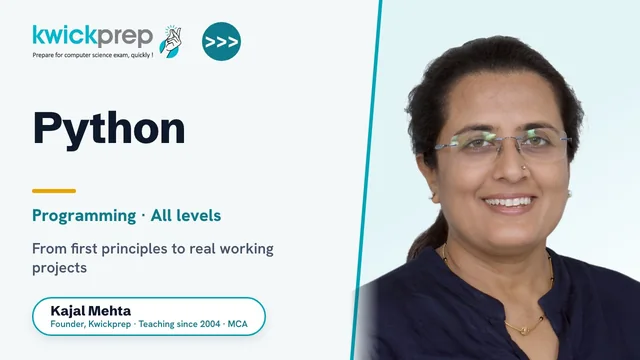
Learn Python from first principles to real projects, beginner to confident coder.
A structured, all-levels Python programming course that takes learners from the very basics through data structures, functions, object-oriented programming and hands-on projects. The curriculum follows the official Python documentation and widely-used learning paths (the official Python documentation at python.org) and aligns closely with the Python pedagogy used in CBSE Computer Science (Classes 11-12), making it suitable for school students and self-learners alike. Note: this is a board-independent programming track; topics mirror standard authoritative Python curricula rather than a single exam board.
What you'll learn
- ✓Write, run and debug Python programs from scratch in IDLE/VS Code
- ✓Use variables, operators, strings and control flow to solve problems
- ✓Choose and manipulate the right data structure (list, tuple, set, dictionary)
- ✓Break problems into reusable functions and apply recursion
- ✓Read and write files and handle CSV/JSON data
- ✓Handle errors gracefully with exception handling
- ✓Design programs using classes, objects, inheritance and polymorphism
- ✓Build and present end-to-end mini-projects, including a data-driven one
Full syllabus
Mapped to the official Programming curriculum.
01Getting Started with Python+
- Installing Python and using the interpreter / IDE (IDLE, VS Code)
- Interactive mode vs script mode
- print() and basic output
- Comments and code readability
- Your first program
02Variables, Data Types and Operators+
- Variables and assignment
- Numbers (int, float, complex) and Booleans
- Type casting and type checking
- Arithmetic, comparison, logical, assignment operators
- Identity and membership operators
- Taking user input with input()
03Strings+
- Creating and indexing strings
- Slicing and immutability
- String concatenation and repetition
- Common string methods
- String formatting (f-strings, format())
- Escape sequences
04Control Flow+
- if / elif / else statements
- Nested and shorthand conditionals
- match-case statements
- while loops
- for loops and the range() function
- break, continue and pass
05Data Structures+
- Lists: indexing, slicing, methods, sorting
- List comprehensions
- Tuples and unpacking
- Sets and set operations
- Dictionaries and nested dictionaries
- Looping techniques over collections
06Functions+
- Defining and calling functions
- Parameters, arguments and return values
- Default, keyword, *args and **kwargs
- Scope: local vs global
- Lambda (anonymous) functions
- Recursion and an idea of efficiency
- Modular thinking and reusability
07Modules and Standard Library+
- Importing modules and packages
- math, random, statistics modules
- datetime and time
- Creating your own modules
- pip and installing third-party packages
- Brief tour of the standard library
08Input/Output and File Handling+
- Reading and writing text files
- File modes (r, w, a, r+)
- with statement and context managers
- Working with CSV files
- Introduction to JSON
09Errors and Exception Handling+
- Syntax errors vs runtime errors
- try / except / else / finally
- Catching specific exceptions
- Raising exceptions
- Debugging strategies
10Object-Oriented Programming+
- Classes and objects
- The __init__ method and self
- Instance attributes and methods
- Encapsulation and private members
- Inheritance and method overriding
- Polymorphism
- Special / dunder methods (__str__, __repr__)
11Working with Data (Intro Libraries)+
- Introduction to NumPy arrays
- Introduction to Pandas DataFrames
- Basic data analysis on CSV data
- Simple plotting with Matplotlib
- When and why to use libraries
12Projects and Applications+
- Console mini-projects (calculator, quiz, number game)
- Text/file processing automation script
- OOP-based application (e.g. bank/library/inventory manager)
- A small data-driven project using a CSV dataset
- Code organisation, testing and documentation
- Version basics and sharing your code
Tools you'll use
Exam pattern
Board-independent programming track, so there is no fixed external exam. Assessment is project- and practical-driven: roughly 60% hands-on coding assignments and projects, 40% concept checks/quizzes. For reference, in CBSE Computer Science (which uses Python) the board pattern is 70 marks theory + 30 marks practical.
Practical / project
Hands-on lab in every unit: learners code along in IDLE/VS Code and complete graded programming assignments. Culminates in multiple projects, console apps (calculator, quiz, game), a file-processing automation script, an OOP-based application, and a small data analysis project on a real CSV dataset using Pandas/Matplotlib. Mirrors CBSE-style practical work (program writing + project + viva).
Who it's for
School students (Class 8 and above), CBSE/ICSE/state-board Computer Science learners wanting a stronger Python foundation, and absolute beginners or self-learners of any age who want a structured path from basics to projects.
What's included
- ✓Live, interactive online Python classes with Kajal Ma'am, code along in real time on a shared screen
- ✓Chapter-wise notes and quick-reference cheat sheets for every Python concept (syntax, data structures, OOP)
- ✓Graded programming assignments after each unit, with line-by-line feedback on your code
- ✓Worked solutions to practice problems and reference programs for each topic
- ✓Regular one-on-one doubt-solving sessions to clear stuck points and debug your code
- ✓Hands-on lab in every unit (IDLE / VS Code / Jupyter) plus guided mini-projects
- ✓End-to-end project guidance: console apps, a file-automation script, an OOP application and a small data project
- ✓Practical and viva preparation modelled on CBSE-style program writing, project work and viva
Why study Python?
Python is the most important programming language in school Computer Science today, in CBSE Class 11-12 it powers the Computational Thinking and Programming unit, which carries roughly 40 of the 70 theory marks (about 57%) plus the bulk of the 30-mark practical. Learning Python properly, from first principles rather than by rote, builds the logical and problem-solving foundation that every later subject (data structures, databases, AI) depends on. Because the language is readable and beginner-friendly, it is one of the highest-scoring areas for students who genuinely understand it, and the same skills transfer directly to college, competitive coding and the workplace. This all-levels track is board-independent, so it suits CBSE, ICSE, GSEB and IGCSE students as well as complete beginners who want a structured path from basics to real projects.
Python is among the most widely used languages in industry, powering data science, machine learning and AI, web back-ends, automation and scientific computing. A strong Python foundation is directly useful for B.Tech/BCA/BSc Computer Science degrees and for roles such as software developer, data analyst, data scientist and ML engineer. The course's coverage of OOP, file handling and intro NumPy/Pandas/Matplotlib mirrors the exact starting point of real data and software work, without overstating that a single course guarantees a job.
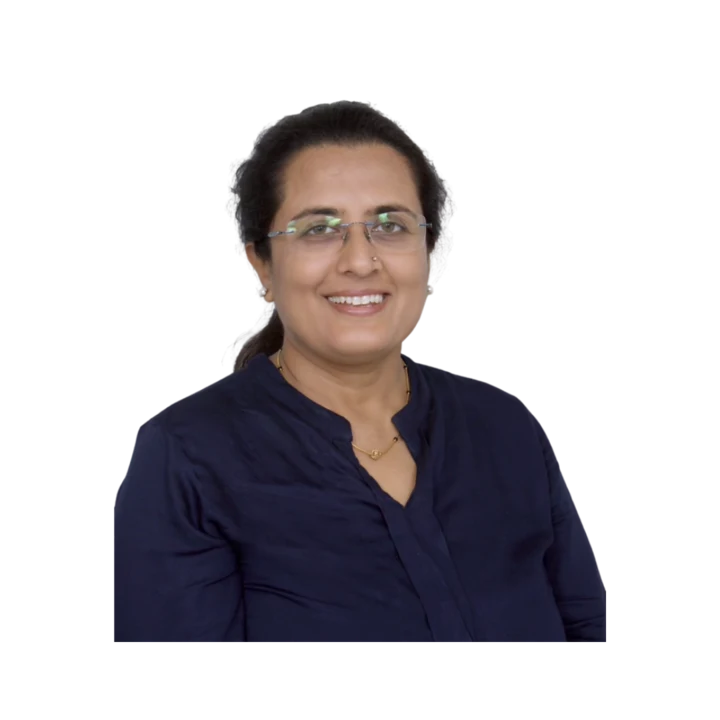
Learn directly from Kajal Ma'am
An MCA who has taught computer subjects since 2004, Kajal Mehta personally mentors every batch, turning dense theory into clear, exam-ready understanding.
The Kwickprep Method
Computer subjects are not learnt by memorising code. Since 2006, Kajal Ma'am has taught Python with one simple loop that turns logic into marks:
Concept in plain words
Every topic starts from why it exists and what problem it solves, before any code.
Worked through live with you
Kajal Ma'am writes and runs it on a shared screen, so you see it work, not just read it.
Board-pattern practice
You solve the exact question types that repeat in your board's paper, section by section.
Doubts till it clicks
Ask anything, any time in the live class. Nothing moves on until the concept is clear.
Exam & practical drill
Full papers, the practical file, the project and viva, rehearsed until you walk in confident.
Where this takes you
This is not just a subject to clear, it is a skill that carries forward:
- →Python powers data science, AI, automation and web apps.
- →The world's most in-demand first language asked for in almost every tech role.
- →Clean logic that transfers to any other language you learn next.
It is the single best language to begin a coding, data-science or AI career with. We teach for the board first, and for the thinking that lasts after it.
What students say
“The course's greatest benefit for me was the profound comprehension of the core principles it fostered, which has been pivotal in enhancing my academic foundation.”
“I was able to complete entire syllabus in short duration while preparing for conpetitive exams. Best way to cover entire syllabus. Highly satisfied with teaching method.”
“Very knowledgeable teacher, with thorough understanding of current paper pattern, FAQs, as well as syllabus.”
Read all 36 verified student & parent reviews (4.9/5) or see the board results.
Course FAQs
Are the Python classes live or recorded?+
Is this a Group batch or One-to-One course, and how do the fees differ?+
Do I need any prior coding experience to join?+
Does this course align with the CBSE / ICSE Computer Science Python syllabus?+
Will I get help with practicals, projects and viva?+
Can I attend from outside India, and is a demo class available?+
Related courses
C Language
Learn C from first program to pointers, structures, and files, the foundation of all mode
Java
Master Java from first program to data structures the way ICSE and ISC actually teach it.
C++
Master C++ from first program to OOP, STL and data-structure fundamentals.
What students & parents say
4.9/5 from 36 verified student & parent reviews. Below are three, unedited.
Learning with Kwickprep has truly been a wonderful experience. The course was well-structured, and the teaching methods were clear, effective, and easy to follow. The study materials, especially the notes and tricks shared, played a huge role in helping me prepare efficiently and score well, even in a short amount of time. What I appreciated the most was the constant guidance and support from the teacher. The way everything was taught made concepts easy to grasp and apply in exams. I'm genuinely grateful for the time, effort, and dedication put into each session. It was completely worth it. Thank you so much for everything, your teaching really made a difference in my learning journey! 😊
Very knowledgeable teacher, with thorough understanding of current paper pattern, FAQs, as well as syllabus.
I was able to get my doubts cleared and I had access to a lot of material. Always got response within the committed time.
Book a free demo for Python
See a real class before you decide. No pressure, no payment.
Book Free Demo on WhatsApp