KwickAcademy Course Topics · 7 min · free
Online Shopping and Bill payments
Online shopping is buying goods or services over the internet; online bill payment is paying regular bills like electricity online.
Follows the syllabus of: CBSE Class 12 Information Technology (802)
On screen in this lesson
What is online shopping?
| Buying goods or services over the Internet |
| Done on a website or a mobile app |
| Pay online or pay cash on delivery |
| Product is delivered to your address |
Types of online stores
| Marketplace: many sellers on one site |
| Brand store: one company sells its own goods |
| Quick commerce: groceries in minutes |
| Service apps: tickets, food, cab rides |
Ways to pay online
| Method | How it works | Example |
|---|---|---|
| UPI | UPI ID or QR code | Pay with a UPI app |
| Debit card | Money from bank | Card number, OTP |
| Credit card | Pay the bank later | Monthly bill |
| Net banking | Bank login | Bank website |
| Cash on delivery | Pay at the door | Cash or QR |
Advantages and disadvantages
| Advantages | Disadvantages |
|---|---|
| Shop any time | Cannot touch item |
| Easy price compare | Delivery takes time |
| Wide choice | Risk of fake sites |
| Home delivery | Return can be slow |
What is online bill payment?
| Paying regular bills through the Internet |
| Electricity, water, gas and mobile bills |
| DTH, broadband, insurance and school fees |
| No queue, pay from anywhere, get a receipt |
Where can you pay bills?
| Website or app of the service provider |
| Your bank's net banking or mobile app |
| UPI apps with a bill payment section |
| Bharat BillPay: one system for many billers |
Quick answers
When do you enter a UPI PIN?
Only to send money.
Where can you report online fraud?
Call 1930 or visit cybercrime.gov.in.
KwickClips from this lesson
Short clips, one idea each. Good for revision the night before.
The full lesson, in text
Hello students, welcome to Kwickprep. Your electricity bill is due today, and you also need a new school bag. Can you finish both without leaving home? Yes, you can. Today we will learn how online shopping and online bill payment work, and how to do them safely.
Let us start with the meaning. Online shopping means buying goods or services using the Internet. You shop on a website or a mobile app, from a phone or a computer. You can pay online, or choose cash on delivery on many sites. The seller then delivers the product to the address you give.
Online stores come in a few common types. A marketplace is one website where thousands of different sellers list their products. A brand store is the website of one company that sells only its own products. Quick commerce apps deliver groceries and daily items within a short time, often minutes. Service apps sell services, like train tickets, food delivery and cab rides.
Here are the steps of an online purchase. First, search for the item and compare prices, ratings and reviews. Then add the item to the cart, which is a list of things you plan to buy. At checkout, the site asks, are you logged in? If yes, you enter or confirm the delivery address. If no, you first log in or create an account, and then give the address. Next, you pay, and the site shows an order number. Finally, you track the delivery until the parcel reaches you.
There are five common ways to pay. UPI, the Unified Payments Interface, moves money from your bank account using a UPI ID or a QR code. A debit card takes money directly from your bank account, and you confirm with a one time password, called an OTP. A credit card lets you pay now and repay the bank later, in a monthly bill. Net banking means logging in to your bank's website to pay. Cash on delivery means you pay only when the parcel arrives.
Online shopping has good and bad sides. You can shop at any time of day, but you cannot touch or try the item before buying. Comparing prices is easy, but you must wait for delivery. There is a huge choice of products, but fake websites and fake sellers also exist. The item comes to your home, but returns and refunds can take several days.
Now the second part of our topic. Online bill payment means paying your regular bills through the Internet instead of standing in a queue. Common bills are electricity, water, piped gas and mobile postpaid bills. People also pay DTH television, broadband, insurance premium and school fees online. You save time, you can pay from anywhere, and you get a digital receipt at once.
You can pay a bill in several places. The first is the website or app of the company itself, like your electricity board. The second is your bank's net banking or mobile banking app. The third is a UPI app, which usually has a section for bills and recharges. Many of these use Bharat BillPay, a system that connects thousands of billers. So you can pay many bills from one app.
Let us pay an electricity bill step by step. First, open your bank app or UPI app and choose the electricity section. Select your electricity board and type the consumer number printed on your bill. The app fetches the bill and shows the customer name, the amount and the due date. The app asks you to check, are these details correct? If yes, you pay and save the receipt, which shows a transaction ID. If no, go back and fix the consumer number before paying anything.
Pause and predict this situation. You paid a bill, and the money was cut from your bank account. But the app still shows the bill as unpaid. What should you do first? Do not pay again. Keep the transaction ID, wait a little, and raise a complaint in the same app, because failed payments are usually refunded.
Safety is the most important part of this lesson. Before paying, check that the web address starts with HTTPS and shows a lock sign. Never share your OTP, PIN or CVV with anyone. The CVV is the three digit code on the back of a card. Not even with a caller who says he is from your bank. Remember, you enter a UPI PIN only to send money, never to receive money. Use strong passwords, and avoid paying on public Wi-Fi. If you are cheated, call the cyber crime helpline one nine three zero, or report at cybercrime dot gov dot in.
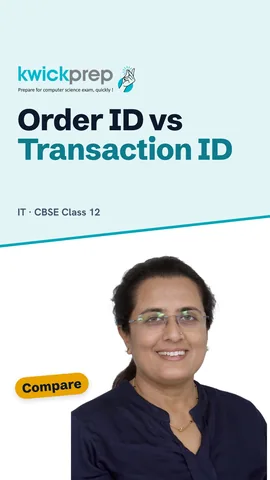
Let us compare the two side by side. In shopping you pay for new goods, but in bill payment you pay for a service you already used. In shopping you decide the amount by choosing items, while a bill amount is decided by the biller. Shopping needs your delivery address, while a bill needs your consumer number. Shopping gives you an order ID and an invoice, and a bill payment gives you a transaction ID as proof.
Let us revise what we learned today. Online shopping means buying goods and services over the Internet. The steps are search, add to cart, log in, give the address, pay and track. You can pay by UPI, cards, net banking or cash on delivery. Bills can be paid on the biller's site, a bank app or a UPI app. And never share your OTP, PIN or CVV, and report any fraud on one nine three zero.
Courses that teach this
| Course | Unit |
|---|---|
| CBSE Class 12 Information Technology (802) | Operating Web Based Applications |
Voice-over in this lesson is AI-generated. The script is written and checked by Kajal Ma'am. Boards can revise a syllabus mid-year, so confirm anything you plan around against the official board circular. Keep your passwords, OTPs and ID numbers to yourself — we never ask for them. To reach Kajal Ma'am, use the WhatsApp button; sharing your number there is how we call you back.
Free to watch, no sign-up. Live classes with Kajal Ma'am are the paid course; these lessons stay free either way.