
KwickClips Python · 42 sec · free
Why does 1 print as 1. in np.array([1, 2.5, 3])?
Short answer. One value is a decimal, so the dtype becomes float64 for all values.
What does a.shape give for three values?
(3,).
Remember
| dtype: one type for all |
| Maths works value by value |
One decimal changes a whole NumPy array. How? Shape shows three values. One is a decimal, so d type is float. One prints as one point. Star two doubles each value. D type is one type for all values. Maths works value by value.
This clip is from the full lesson: Introduction to NumPy Arrays — 6 minutes, with the tables, the quick answers and the whole lesson in text.
Useful for: CBSE Class 10 Artificial Intelligence (417), CBSE Class 11 Informatics Practices (065), CBSE Class 11 Artificial Intelligence (843), CBSE Class 12 Artificial Intelligence (843)
More KwickClips from this lesson
![Python code creating a NumPy array of marks and adding 5, with output [65 77 50].](/images/learn/clips/PY29-R1.webp) Why is NumPy fast?39 sec
Why is NumPy fast?39 sec![Python code converting a marks list to a NumPy array; output shows [88 75 92] without commas.](/images/learn/clips/PY29-R2.webp) How do you create a NumPy array from a list?40 sec
How do you create a NumPy array from a list?40 sec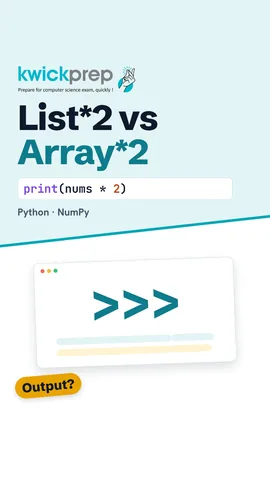 What does [1, 2, 3] * 2 give?36 sec
Disclaimer. KwickAcademy is free study material for general learning and revision. Parts of it, including the voice-over, are produced with the help of AI tools and may contain errors; if you spot one, please tell us and we will correct it. Syllabus, marks and exam details follow the latest official board publications available to us, and boards can change them at any time, so always confirm against your board's official website and your school. Using this material does not guarantee any marks or result. Board names and trademarks belong to their owners; Kwickprep is not affiliated with or endorsed by any examination board. We never ask for passwords, OTPs or ID numbers. Your progress is saved only in this browser. Full disclaimer · Privacy